

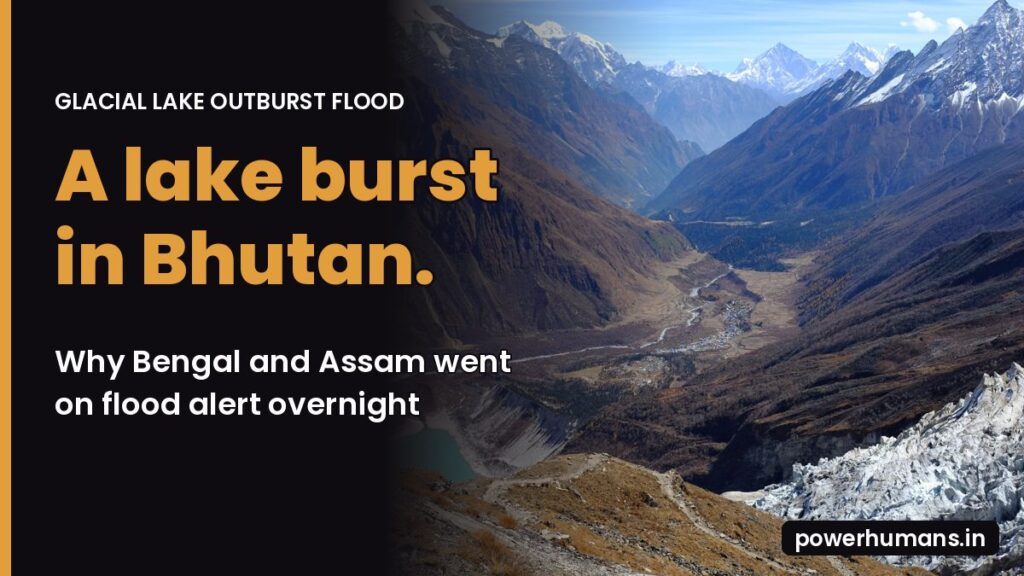
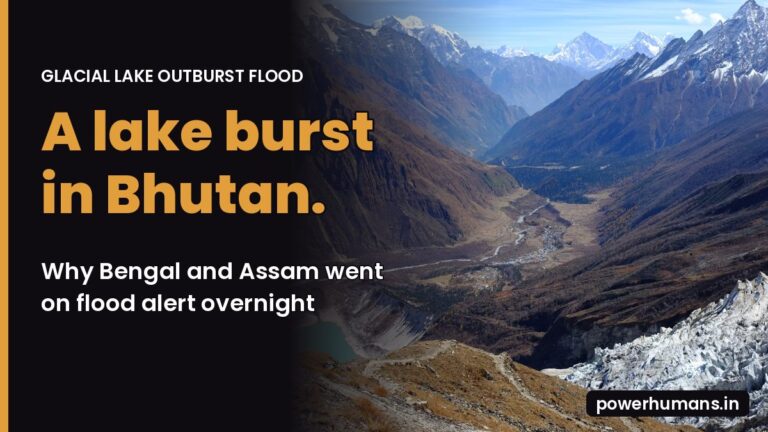
On Thursday evening, a lake high in the mountains of north Bhutan broke through its natural wall. Within hours, police in West Bengal were moving thousands of families into school buildings, more than 100 km away in a different country.
That is what a glacial lake outburst flood (GLOF) can do. Here’s what happened at Shintaphu lake, why the Sankosh river in India went on red alert, how GLOFs form, and what anyone living near a Himalayan river should do.
Quick answer
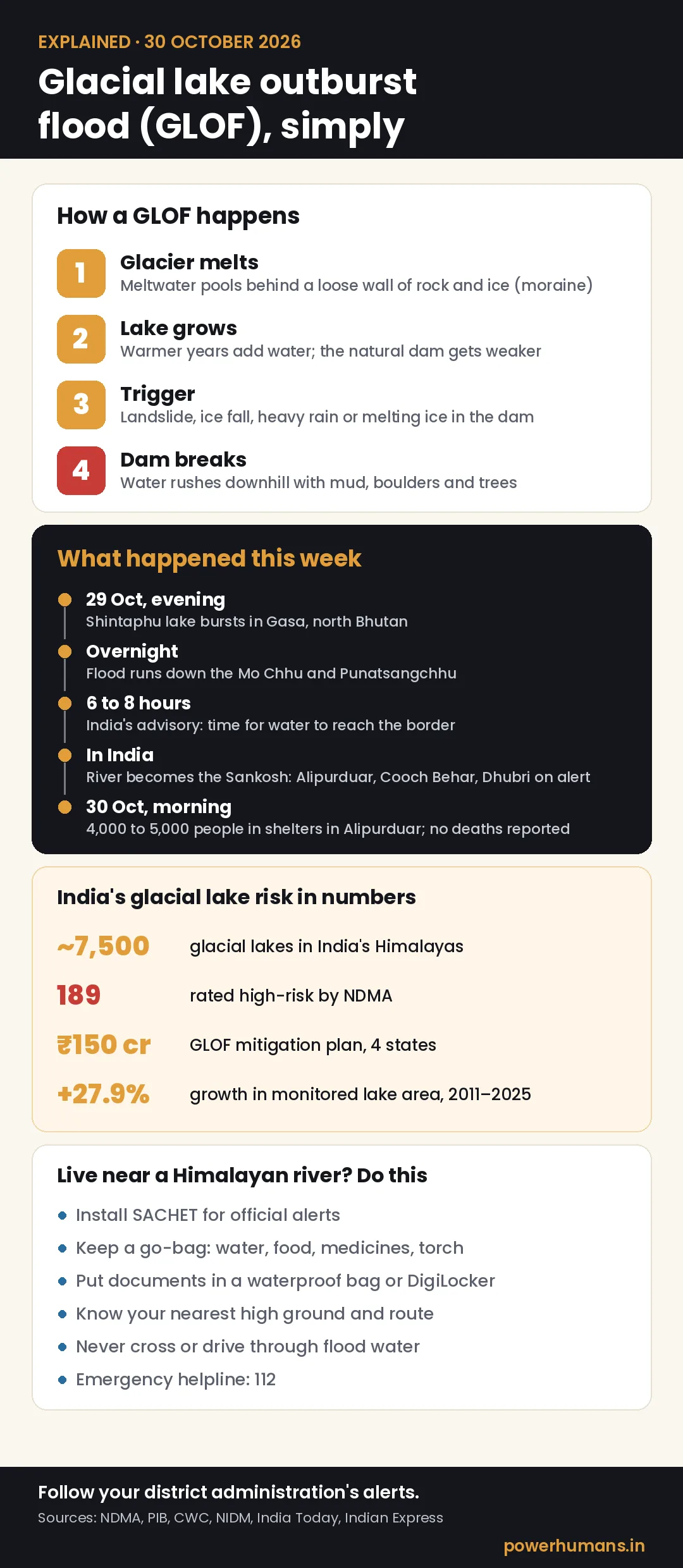
- What happened: Shintaphu lake (Shintaphu Tsho) in Bhutan’s Gasa district burst on the evening of 29 October 2026. No deaths have been reported in Bhutan or India.
- Why India was alerted: the floodwater flows down the Mo Chhu and Punatsangchhu, which becomes the Sankosh river in India. Alipurduar, Cooch Behar and Assam’s Dhubri were put on alert.
- GLOF meaning: a sudden release of water from a lake formed by a melting glacier, usually when its loose rock-and-ice wall gives way.
- India’s risk: about 7,500 glacial lakes in the Indian Himalayas, 189 of them rated high-risk by the NDMA.
- Stay safe: follow district alerts, keep a go-bag ready, move to high ground when told, and call 112 in an emergency.
Bhutan flood news today: what happened at Shintaphu lake
The outburst was reported on Thursday evening, 29 October, at Shintaphu lake below Wakila mountain in Gasa district, India Today and News9 reported. The lake sits in the upper reaches of the Mo Chhu basin. According to the reports, Shintaphu is one of 17 glacial lakes in Bhutan rated potentially dangerous.
In Bhutan, the flood washed away infrastructure at the Gasa hot springs and part of the road to Laya village, which has been closed indefinitely, The Straits Times reported, citing the state broadcaster BBS and the national newspaper Kuensel. Two Bailey bridges may also have been swept away. A solar-powered irrigation system in Punakha was damaged. The area had been evacuated before the water arrived, and no injuries were reported.
For more explainers on news shaping the country this week, see our Trending section.
Why the Sankosh river flood alert reached Bengal and Assam
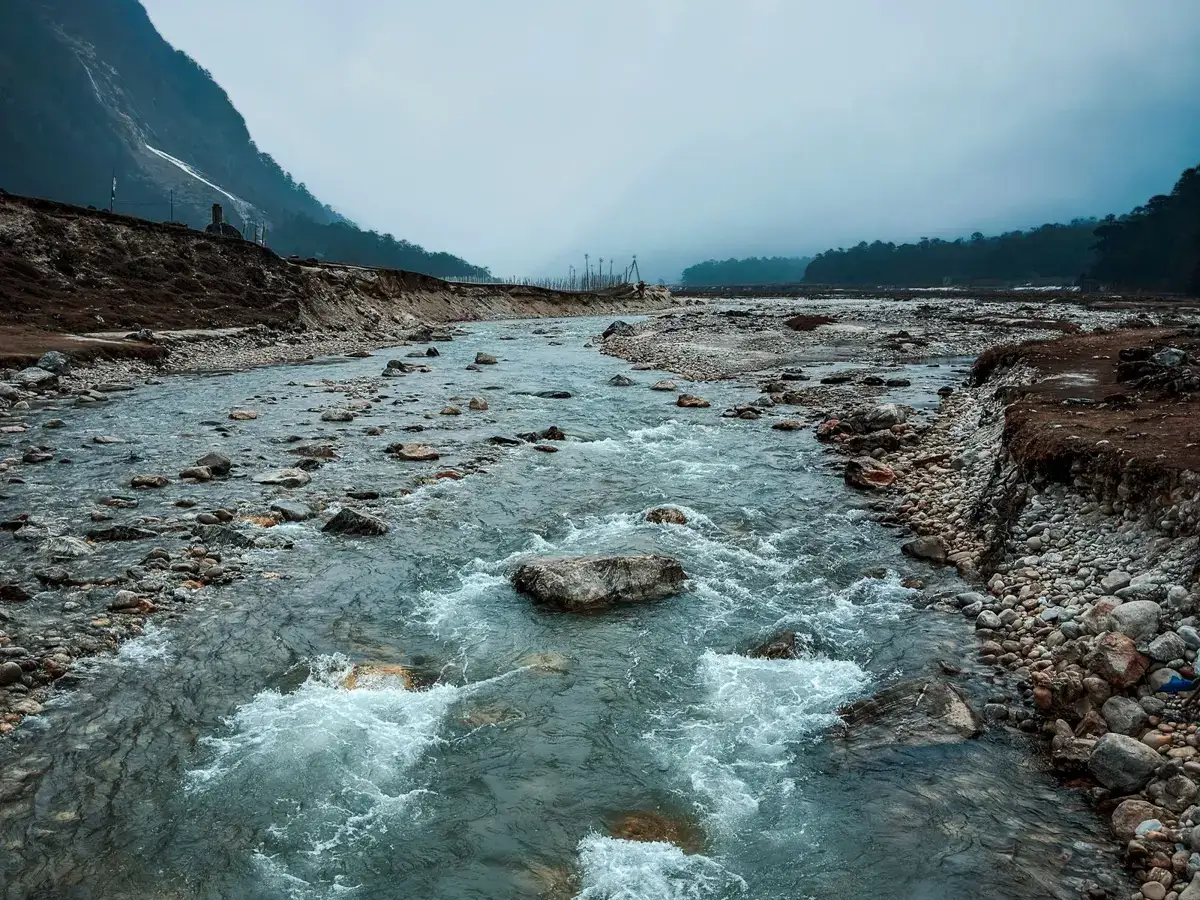
Bhutan’s Punatsangchhu is known as the Sankosh once it enters India, and it eventually drains into the Brahmaputra. So a surge in the mountains becomes a surge in the plains.
India issued a special advisory warning of a sudden rise in the Sankosh in West Bengal’s Alipurduar district and Assam’s Dhubri district. It estimated the water could reach the India-Bhutan border within six to eight hours. Alerts also went out across North Bengal, including the Darjeeling hills, Jalpaiguri and Cooch Behar. NDRF and SDRF teams were deployed at Tufanganj and Boxirhat in Cooch Behar.
By Friday morning, the danger had eased. Alipurduar police chief Amit Kumar Shaw told ANI that about 4,000 to 5,000 people had been moved into shelters, mostly schools, and more than 6,000 others to safer places. The flow had weakened slightly, he said, but a red alert stayed in force on the Sankosh, and he warned that the river could carry dead fish, logs and concrete debris.
If you’ve seen “flood alert Alipurduar” messages on WhatsApp, check them against your district administration or the official SACHET app before forwarding. Our guide to what weather alerts mean and how to prepare for a cyclone explains the colour codes, and you can find more in our weather alerts coverage.
What is a glacial lake outburst flood? GLOF meaning and full form
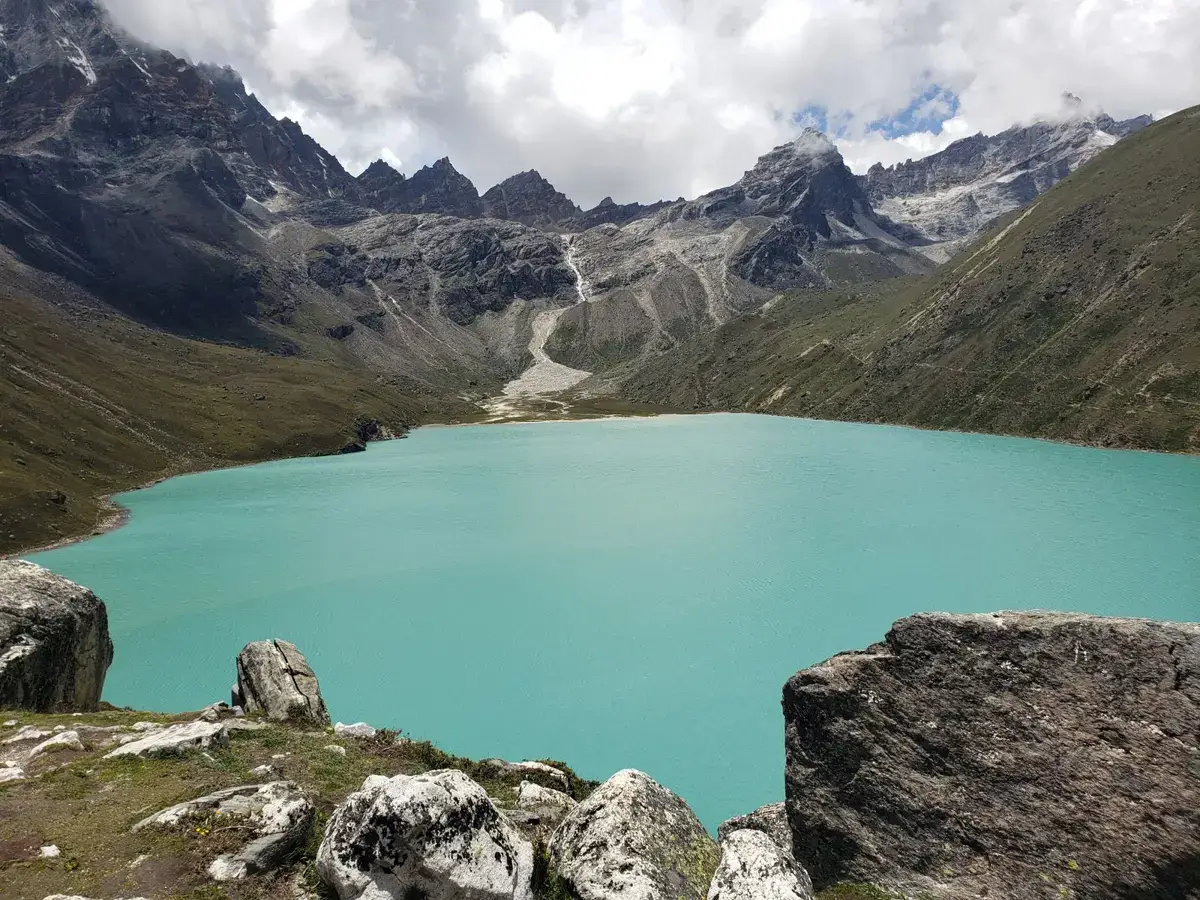
GLOF stands for Glacial Lake Outburst Flood. When a glacier retreats, its meltwater collects in a hollow in front of or on top of the ice. Many of these lakes are held back by a moraine: a heap of loose rock, gravel and buried ice the glacier left behind. It is a natural dam, but nobody engineered it.
When that wall fails, the lake can empty in hours. The water picks up mud, boulders and trees as it races down narrow valleys.
GLOF kya hai? In simple Hindi
GLOF ko Hindi mein “himnad jheel ka achanak phatna” samjhiye. Pahadon mein glacier pighalkar jheel banta hai. Jab us jheel ki kamzor mitti-patthar ki deewar toot jaati hai, to saara paani ek saath neeche behta hai. Isi ko log aam bol-chaal mein “glacier phatna” ya “glacier burst” kehte hain.
Why GLOFs happen: the 4 usual triggers
Glacier researchers describe a few common ways a glacial lake breaks out:
- A landslide or ice avalanche falls into the lake and sends a wave over the dam.
- Heavy rain or fast melting raises the water level until it spills over and starts cutting a channel.
- Buried ice inside the moraine melts, weakening the wall from within.
- Seepage slowly erodes the dam until it gives way.
Once water starts flowing over the top, it erodes the dam faster, which lets more water out. That feedback is why outbursts are so sudden. Reports on Shintaphu have not yet confirmed what triggered this week’s breach.
Climate change raises the odds. Warmer temperatures shrink glaciers, which makes the lakes in front of them bigger. India’s Central Water Commission (CWC) reported in October 2025 that the area of the 55 Indian glacial lakes it could compare grew 27.87% between 2011 and July 2025, from 1,952 to 2,496 hectares. Small daily choices count too, as our guide to simple steps to a more sustainable life shows.
GLOF in India: recent examples and prone areas
This is not just a Bhutan problem. The worst recent GLOF in India came in October 2023, when South Lhonak lake in north Sikkim burst. The surge down the Teesta washed away the Chungthang dam, several bridges and parts of NH-10, and hit Mangan, Gangtok, Pakyong and Namchi districts, according to the NDMA’s situation report. Dozens of people died and many more were reported missing.
Bhutan has its own history. In October 1994, an outburst from Lugge Tsho sent floodwater down the Pho Chhu towards Punakha and killed more than 20 people, according to studies of the event and the ICIMOD glacial lake inventory.
The GLOF-prone areas in India are the high Himalayan states and union territories: Ladakh, Jammu and Kashmir, Himachal Pradesh, Uttarakhand, Sikkim and Arunachal Pradesh. Those are the six regions where the CWC lists lakes for close monitoring, with Sikkim having the most (28). Downstream areas such as North Bengal and western Assam can also be hit by floods that start in Bhutan.
How India watches its glacial lakes: early warning and mitigation
There are nearly 7,500 glacial lakes in the Indian Himalayas, and the National Disaster Management Authority (NDMA) has rated 189 of them high-risk, The Hindu and the Hindustan Times reported.
Key GLOF mitigation measures in India include:
- A national programme: the Centre approved the ₹150 crore National GLOF Risk Mitigation Programme for Arunachal Pradesh, Himachal Pradesh, Sikkim and Uttarakhand, with ₹135 crore from the Centre, according to the Press Information Bureau (PIB).
- Early warning systems: automatic weather and water-level stations at lakes and downstream, so sirens and phone alerts can go out before the water arrives.
- Lake lowering: safely draining some water to reduce the pressure on a weak moraine.
- Satellite monitoring: the CWC tracks 2,843 glacial lakes and water bodies across the Himalayan region every month, including lakes in neighbouring countries.
- Rules on paper: the NDMA has had guidelines for managing GLOFs since October 2020.
This week showed why cross-border warnings matter: Indian districts had hours, not minutes, to move people.
What to do if you live near a Himalayan river
These steps follow the flood safety advice of the National Institute of Disaster Management (NIDM) and the NDMA:
- Get official alerts. Install the NDMA’s SACHET app and follow your district administration and police on social media.
- Keep a go-bag ready. Pack drinking water (NIDM suggests at least 4 litres per person per day for 3 days), dry food, prescribed medicines, a first-aid kit, a torch, spare batteries or a power bank, and dry clothes.
- Protect your documents. Keep Aadhaar, ration card, bank papers and certificates in a waterproof bag, and save copies in DigiLocker.
- Know your high ground. Find the nearest safe shelter, such as a school or community hall, and the safest route to it.
- Move early when told. Help children, older people, pregnant women and anyone who is ill or disabled first. Switch off the main power and close the gas cylinder before you leave.
- Stay out of flood water. Don’t walk, swim or drive through it, and keep away from riverbanks, fallen power lines and open drains.
- After the flood, drink only boiled or chlorinated water, throw away food that touched flood water, and use mosquito nets. Waterlogging can bring a spike in mosquito-borne illness, so learn the dengue warning signs, day by day.
Call 112 for any emergency. If someone is injured or falls ill after a flood, see a doctor.
FAQ: glacial lake outburst floods
What is the full form of GLOF?
GLOF stands for Glacial Lake Outburst Flood: a sudden flood caused when a lake formed by glacier meltwater breaks through the natural dam holding it back.
Is the Bhutan flood a danger to India now?
As of Friday morning, 30 October, authorities said the main surge had passed and residents in the Indian districts were safe, but a red alert remained on the Sankosh. Follow your district’s updates before returning to riverside homes.
Which areas in India are prone to GLOFs?
Ladakh, Jammu and Kashmir, Himachal Pradesh, Uttarakhand, Sikkim and Arunachal Pradesh, plus downstream river valleys such as North Bengal and parts of Assam that receive rivers from Nepal, Bhutan or Tibet.
What was the most recent major GLOF in India?
The South Lhonak lake outburst in Sikkim in October 2023, which sent a surge down the Teesta and destroyed the Chungthang dam.
Can a GLOF be predicted?
Not to the exact hour, but high-risk lakes can be identified with satellites and field surveys, and sensors can raise an alarm as soon as the water level jumps, giving people downstream time to move.
Is “glacier burst” the same as GLOF?
People often use “glacier burst” (or “glacier phatna” in Hindi) loosely. Strictly, a glacier doesn’t burst. What breaks is the lake or the ice-and-rock dam, which is why scientists use the term GLOF.
The takeaway
A glacial lake outburst flood starts far from where most of its damage is done. This week, warnings, sirens and quick evacuations meant a lake bursting in Bhutan caused no reported deaths. With glacial lakes growing as the climate warms, early alerts and a ready go-bag are worth more than ever. For more news explained simply, browse our India Explained stories.
Related reads
- Cyclone Arnab landfall: what red alerts mean and how to prepare
- 9 smog-season habits that actually protect your lungs
- Dengue symptoms day by day: platelets, tests and warning signs
Sources
- India Today (30 Oct 2026): Glacial lake outburst in Bhutan; 5 districts in Assam and Bengal on flood alert
- The Indian Express (30 Oct 2026): Bhutan glacier burst triggers flood alert in Bengal, Assam
- News9 (30 Oct 2026): Bhutan glacial lake outburst triggers flood alerts in Assam, West Bengal
- The Straits Times (30 Oct 2026): Bhutan glacial lake outburst triggers flood, no injuries reported
- The Hindu: NDMA to monitor 189 high-risk glacial lakes
- Hindustan Times: Expeditions to study high-risk glacial lakes in Himalayas begin
- Press Information Bureau: National GLOF Risk Mitigation Programme and NDMA GLOF guidelines
- The Hindu BusinessLine (PTI, Oct 2025): Over 27% increase in glacial lake area among 55 glacial lakes in India since 2011, says CWC
- The Economic Times (Oct 2025): CWC glacial lake monitoring report
- Ministry of Home Affairs / NDMI: Situation report including the Sikkim flash flood, October 2023
- ICIMOD: Inventory of glaciers, glacial lakes and GLOFs, Bhutan
- AntarcticGlaciers.org: Glacial lake outburst floods (GLOFs)
- National Institute of Disaster Management: Flood safety flyer (be prepared, take precautions, stay safe)
- NDMA SACHET: National Disaster Alert Portal






Leave a Reply