

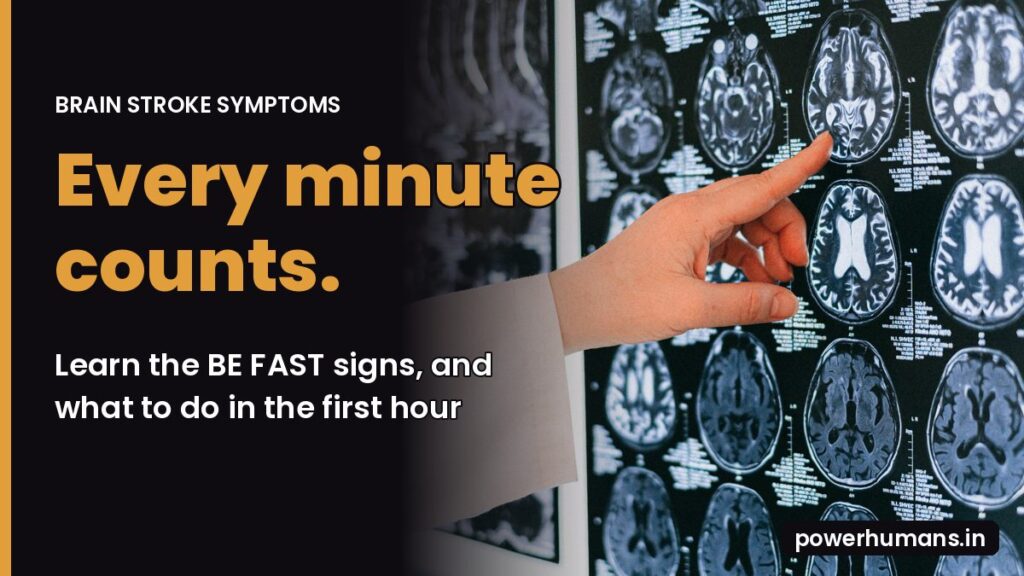
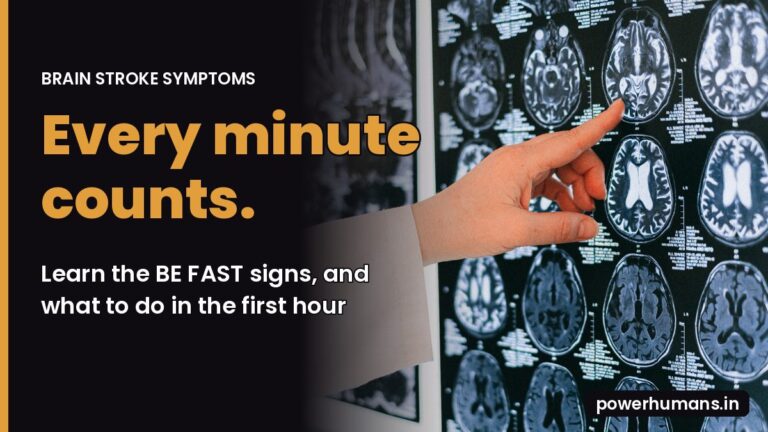
A stroke rarely announces itself. One moment someone is talking over chai; the next, one side of their face sags and their words come out wrong. Knowing the brain stroke symptoms and acting in minutes, not hours, can decide between recovery and lifelong disability.
Today, 29 October, is World Stroke Day, and this year’s message is “Every Minute Counts”. Here’s how to spot a stroke with the BE FAST test, what to do before the ambulance arrives, and how to lower your risk.
Quick answer
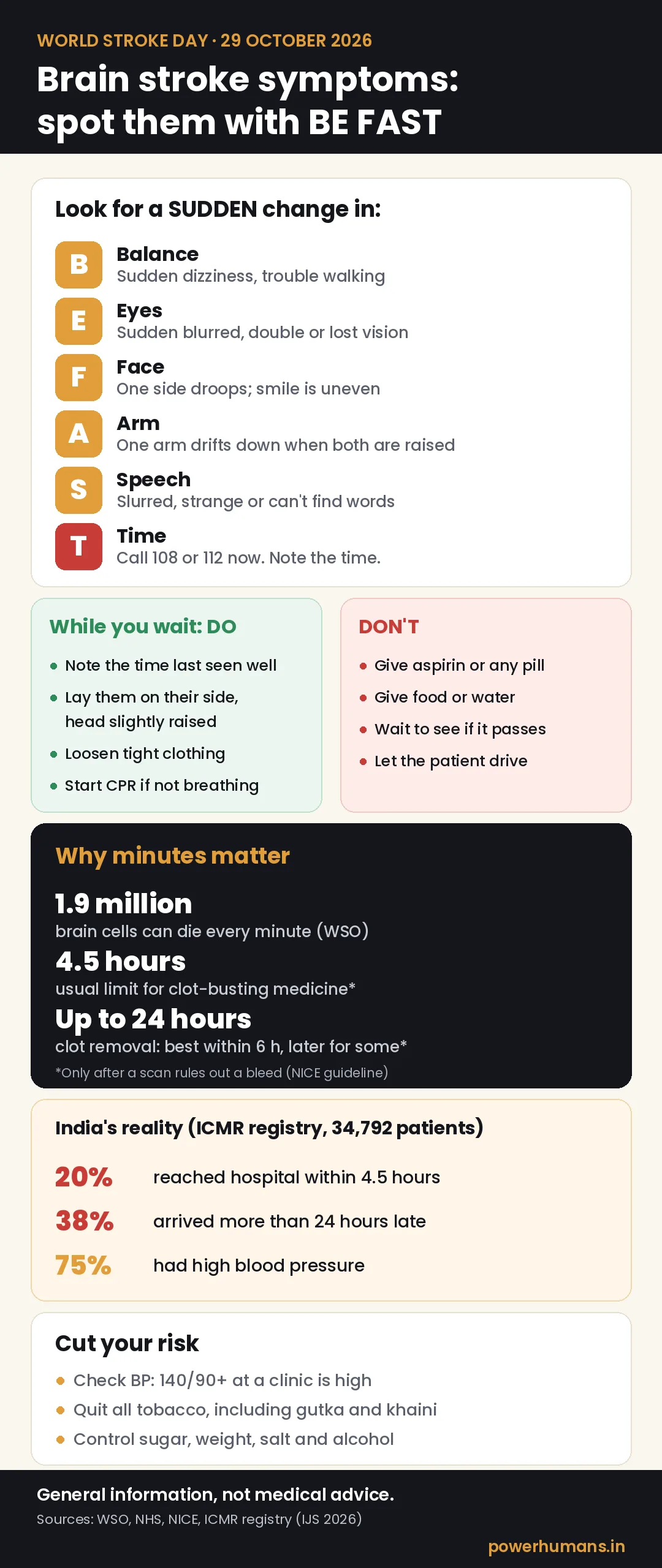
- BE FAST: sudden loss of Balance, Eye (vision) problems, Face drooping, Arm weakness, Speech trouble. Time to call 108 or 112.
- Note the time the person was last seen well.
- Don’t give aspirin, any other medicine, food or water while you wait.
- Clot-busting medicine usually has to start within 4.5 hours, and only after a brain scan.
- Symptoms went away? Still go to hospital: it may have been a mini stroke (TIA).
Why stroke is in the news today: World Stroke Day 2026
The World Stroke Organization (WSO) theme is “Every M1nute Counts” (#ActFAST). Its toolkit says about 1.9 million brain cells can die every minute during a stroke, and one in four people will have a stroke in their lifetime.
Union Health Minister J P Nadda urged people not to ignore sudden facial drooping, arm weakness or difficulty speaking, Akashvani News reported. AIIMS New Delhi’s neurosciences chief, Dr Shailesh Gaikwad, told the broadcaster that India records around 18 lakh stroke cases a year and that patients should be taken straight to a stroke-ready hospital.
Globally, the WSO Global Stroke Fact Sheet 2025 counts almost 12 million new strokes and over 7 million stroke deaths a year. For more health guides, browse our Health & Fitness section.
Stroke kya hota hai? What happens in a brain stroke
A stroke happens when blood stops reaching part of the brain. Brain cells start to die, and whatever that part controls (movement, speech, vision, balance) is affected. Many people call it lakwa or a “paralysis attack”.
There are two main types:
- Ischaemic stroke: a clot blocks a blood vessel. In an Indian Council of Medical Research (ICMR) registry of 34,792 stroke patients at 30 hospitals, 60% of strokes were this type.
- Haemorrhagic stroke: a blood vessel in or around the brain bursts and bleeds.
Only a CT or MRI scan can tell them apart, which is why you should never give medicines at home: a drug that helps one type can harm the other.
Brain stroke symptoms: the BE FAST test
The key word is sudden. The Cleveland Clinic and the US Centers for Disease Control and Prevention (CDC) use BE FAST to remember the main signs:
- B – Balance: sudden dizziness, unsteadiness or trouble walking.
- E – Eyes: sudden blurred vision, double vision or loss of sight in one or both eyes.
- F – Face: ask the person to smile. Does one side droop?
- A – Arms: ask them to raise both arms. Does one drift down or feel numb?
- S – Speech: ask them to repeat a simple sentence. Is it slurred, strange or confused?
- T – Time: if you see any one of these, call for an ambulance immediately.
Other stroke warning signs
The UK’s National Health Service (NHS) also lists numbness down one side of the body, confusion, a sudden severe headache, and nausea or vomiting. In the ICMR registry, the commonest first symptoms were limb weakness (74.8%) and speech problems (51.2%).
Brain stroke ke lakshan, in short
Achanak chehra ek taraf latak jaana, ek haath ya pair mein kamzori, bolne mein ladkhadahat, chakkar aana ya ek aankh se dikhna band hona. Ek bhi lakshan dikhe, to intezaar na karein: turant 108 ya 112 par call karein.
What to do if someone has a stroke at home (stroke first aid)
These steps follow NHS, British Red Cross and Stroke Foundation (Australia) advice.
- Check the time. Note when the person was last seen normal. If they woke up with symptoms, the clock starts from when they went to sleep.
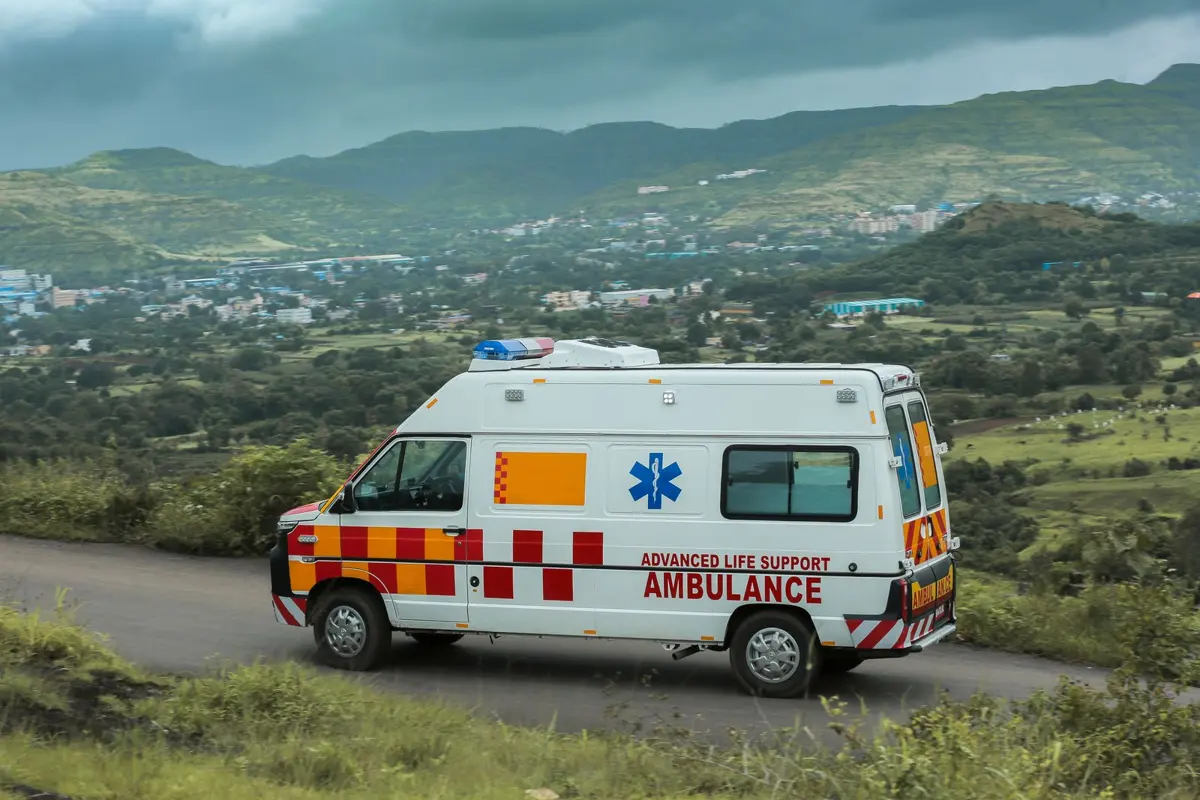
- Call for an ambulance. Dial 108 (the ambulance number in most states) or 112, and say “suspected stroke”. The NHS advises people with symptoms not to drive themselves to hospital.
- Ask for a hospital that can treat stroke, with a CT scan available round the clock. A clinic without a scanner wastes precious time.
- Keep them safe. If they are conscious, lay them on their side with the head slightly raised and supported. Loosen tight clothing and support any weak arm or leg.
- Give nothing by mouth. No food, no water and no medicines, including aspirin. Swallowing can be affected, and aspirin could worsen a bleeding stroke.
- If they stop breathing, start CPR. The emergency call-taker can guide you.
- Take their medicine list and recent BP or sugar readings.
The stroke golden hour and the 4.5-hour window
Treatment for a clot-caused stroke works best when started early. Under the UK’s NICE stroke guideline:
- Thrombolysis (clot-busting medicine) is used within 4.5 hours of symptoms starting, once a scan has ruled out bleeding.
- Thrombectomy (pulling the clot out through a catheter) should be offered as soon as possible and within 6 hours. Selected patients can still get it up to 24 hours after they were last known to be well, if scans show brain tissue that can be saved.
Doctors call the first 60 minutes the “golden hour”. India’s problem is getting there. In the ICMR registry, published in the International Journal of Stroke in January 2026, only 20.1% of patients reached hospital within 4.5 hours, and only about 5% within the first hour. 37.8% arrived more than 24 hours after symptoms began. Just 4.6% of ischaemic stroke patients received thrombolysis, and late arrival was the main reason (74.5% of cases) why it wasn’t given.
The biggest delay usually happens at home, while families wait to see if the symptoms pass.
Mini stroke symptoms: don’t ignore a TIA
A transient ischaemic attack (TIA), or “mini stroke”, causes the same symptoms as a stroke, but they last from a few minutes to a few hours and fully resolve within 24 hours, according to the NHS. Early on, nobody can tell a TIA from a full stroke, so get emergency help. Even if symptoms disappear, the NHS says you should see a specialist within 24 hours, because a TIA can be followed by a full stroke.
Stroke aane se pehle ke lakshan: are there early warnings?
Usually, no. Most strokes strike suddenly. A TIA is the closest thing to a warning, so treat it as an emergency, not a lucky escape.
Why does a stroke happen? Brain stroke hone ke karan
The WSO fact sheet says 84% of the global stroke burden is linked to 23 risk factors that can be changed, including high blood pressure, air pollution, excess body weight, smoking and physical inactivity. In the ICMR registry, the most common risk factors among Indian stroke patients were:
- High blood pressure: 74.5% of patients
- Smokeless tobacco (gutka, khaini and similar): 28.5%
- Diabetes: 27.3%
The NHS also lists high cholesterol, heavy drinking and an irregular heartbeat (atrial fibrillation).
Can young people get a stroke?
Yes. In the ICMR registry, 13.8% of stroke patients were younger than 45. Globally, the WSO says about 15% of strokes happen in people aged 15 to 49.
How to prevent a stroke: 7 practical steps
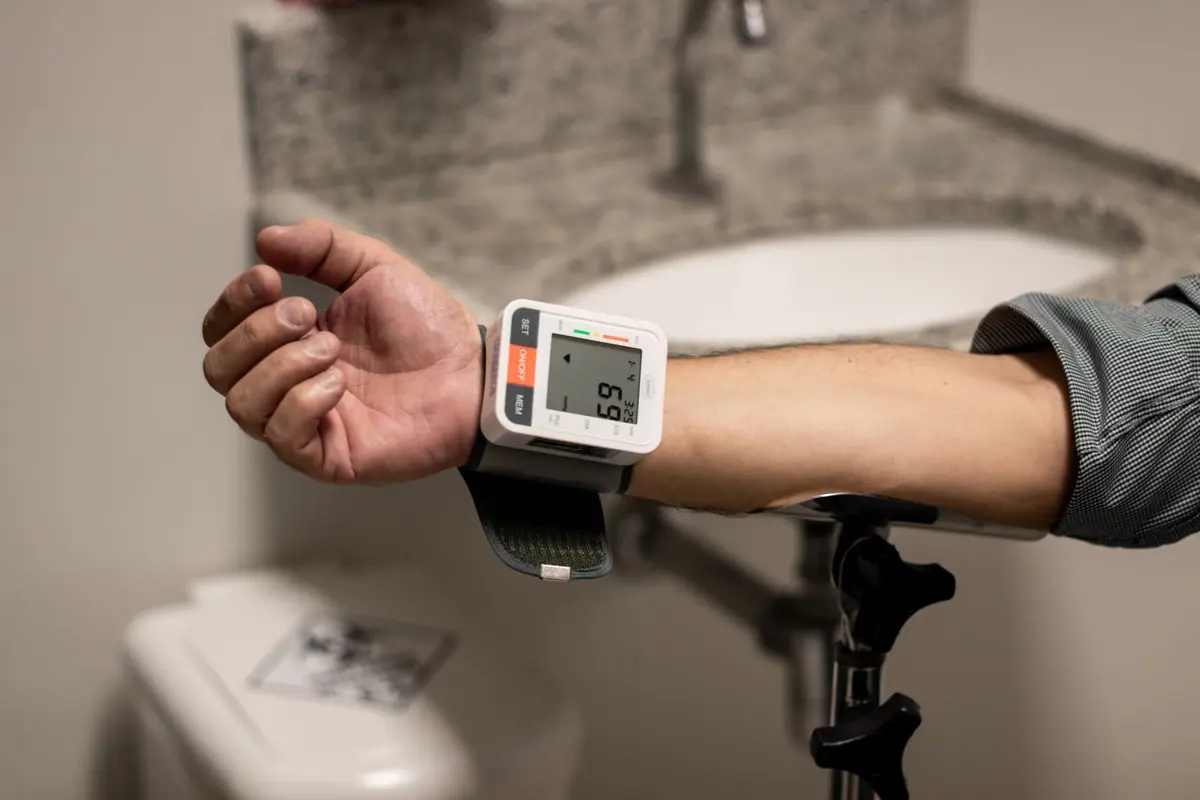
- Know your BP number. The NHS says a reading of 140/90 or higher at a clinic, or 135/85 or higher at home, usually counts as high blood pressure. Check it regularly, as your doctor advises.
- Take BP and sugar medicines every day, even when you feel fine. Don’t stop them without talking to your doctor.
- Quit all tobacco, not just cigarettes. Gutka, khaini and paan with tobacco count too.
- Move more and manage your weight. If the gym isn’t for you, these simple ways to lose weight without exercise are a start, alongside a daily walk.
- Cut back on salt, sugary drinks and alcohol.
- Limit exposure to polluted air. On bad-AQI days, follow our smog-season habits to protect your lungs.
- Get an irregular pulse checked, since atrial fibrillation raises stroke risk.
Our guide to self-care in a busy world and our health tips can help you build these habits.
Stroke vs heart attack: what’s the difference?
A stroke affects blood flow to the brain; a heart attack affects blood flow to the heart. A stroke shows up as face, arm or speech problems; a heart attack usually brings chest pain, breathlessness and sweating. Both need an ambulance immediately.
Brain stroke recovery time: what to expect
It depends on the stroke type, how much brain was affected and how fast treatment began. In the ICMR registry, 43% of patients had a disability at 28 days; at three months 29.7% had a significant disability, while 37% of survivors were disability-free. Physiotherapy and speech therapy help, so ask the treating team for a realistic plan.
Just as with dengue warning signs, knowing what to watch for and when to rush to hospital is half the battle.
FAQ: brain stroke symptoms and first aid
What are the first signs of a brain stroke?
Sudden loss of balance, vision trouble, a drooping face, a weak arm or leg, and slurred speech. Use BE FAST and call 108 or 112.
Can I give aspirin during a stroke?
No. Some strokes are caused by bleeding, which aspirin can worsen. Doctors decide after a brain scan.
What is the golden hour in stroke?
The first hour after symptoms begin, when treatment can save the most brain. Clot-busting medicine is generally given within 4.5 hours.
Mini stroke ke lakshan kya hain?
The same signs as a stroke (face droop, arm weakness, speech trouble), but they fade within 24 hours. It still needs urgent care.
Can a stroke happen at a young age?
Yes. About one in seven stroke patients in the ICMR registry was under 45.
What is the World Stroke Day 2026 theme?
“Every M1nute Counts”, with the message #ActFAST.
The takeaway
Learn BE FAST, teach it to your parents, and save 108 and 112 on everyone’s phone. If you see a sudden face droop, a weak arm or slurred speech, don’t wait and don’t try home remedies. Note the time, call an ambulance and go to a hospital that can scan the brain. For more health explainers, see what’s trending.
This article is for general information and isn’t medical advice. If you or anyone near you shows signs of a stroke, call emergency services immediately. For questions about your own stroke risk, blood pressure or medicines, please consult a doctor.
Related reads
- Why Your Throat Burns Every October: 9 Smog-Season Habits That Actually Protect Your Lungs
- Dengue Symptoms Day by Day: Why the Danger Comes When the Fever Breaks
- How to Lose Weight Without Exercise
Sources
- World Stroke Organization: World Stroke Day 2026, “Every M1nute Counts”
- World Stroke Organization: World Stroke Day 2026 campaign toolkit
- Feigin et al., International Journal of Stroke (2025): WSO Global Stroke Fact Sheet 2025
- International Journal of Stroke (Jan 2026): Stroke patterns, risk factors, management and outcomes from hospital-based stroke registries in India (ICMR)
- Akashvani News (29 Oct 2026): World Stroke Day, Nadda urges citizens to recognise stroke warning signs
- NHS: Symptoms of a stroke
- NHS: Transient ischaemic attack (TIA)
- NHS: High blood pressure
- NICE guideline NG128: Stroke and TIA in over 16s, diagnosis and initial management
- CDC: Signs and symptoms of stroke (B.E. F.A.S.T.)
- Cleveland Clinic: Signs of a stroke, act quickly with BE FAST
- Stroke Foundation (Australia): What to do while you wait for an ambulance
- British Red Cross: First aid for a stroke



Leave a Reply