

You open the cupboard the week before Diwali, and the silver lamp, the little idol and last year’s Dhanteras coin have all turned a dull grey-black. Most tips on how to clean silver at home start with toothpaste. Skip it. The shine lasts a week, and the fine scratches stay for good.
The good news is that cleaning silver is mostly simple chemistry. Baking soda, aluminium foil, mild soap and a soft cloth can safely handle most tarnish. Here are seven hacks that work, which method suits which item, and the mistakes that quietly wear silver away.
Quick answer
- Light dullness: wash with warm water and a drop of dish soap, dry, then buff with a silver polishing cloth.
- Heavy black tarnish on plain, solid silver: lay it on aluminium foil in a glass bowl of very hot water with 1–2 tablespoons of baking soda per litre for 2–5 minutes, then rinse, dry and buff.
- Detailed idols and lamps: work spot by spot with a soft brush or cotton swab and a polish made for silver.
- Skip the foil bath for silver-plated, antique, stone-set, enamelled or hollow items, and don’t clean collectible coins at all.
- Avoid toothpaste, brass polish, steel wool and long soaks in lemon juice or vinegar.
Why does silver turn black?
Silver doesn’t rust. It reacts with sulphur. Traces of hydrogen sulphide and other sulphur gases in the air combine with the metal to form black silver sulphide, which the Canadian Conservation Institute (CCI) calls tarnish. The UK’s Institute of Conservation (Icon) names fuel burning and industry as a main source, which is partly why silver dulls faster in polluted cities, in the same air that makes your throat burn every smog season. Eggs, mustard, onions, rubber bands, wool and the salts on your skin speed it up.
Because tarnish is only a surface layer, you can either rub it off, which takes a little silver with it every time, or turn it back into silver chemically. The best methods below lean on chemistry.
What you need
- Warm water and a mild dish soap without bleach
- Soft cotton cloths, a soft toothbrush and cotton swabs
- A silver polishing cloth
- For the foil bath: a glass bowl, aluminium foil, baking soda and a kettle
- A polish labelled for silver, for stubborn spots
- Rubber gloves, zip-lock bags and silica gel sachets
How to clean silver at home: 7 simple hacks
1. Check what you’re cleaning before you start
This step saves more silver than any polish. The CCI advises looking for a purity stamp (such as 925 or 999) to tell solid silver from plating, then checking for hollow parts, joins, stones or enamel. Anything that can trap liquid should never be soaked. “Oxidised” jewellery is black on purpose, so don’t strip it, and German silver contains no silver at all (see the FAQ).
2. Wash off grease, wax and powder first
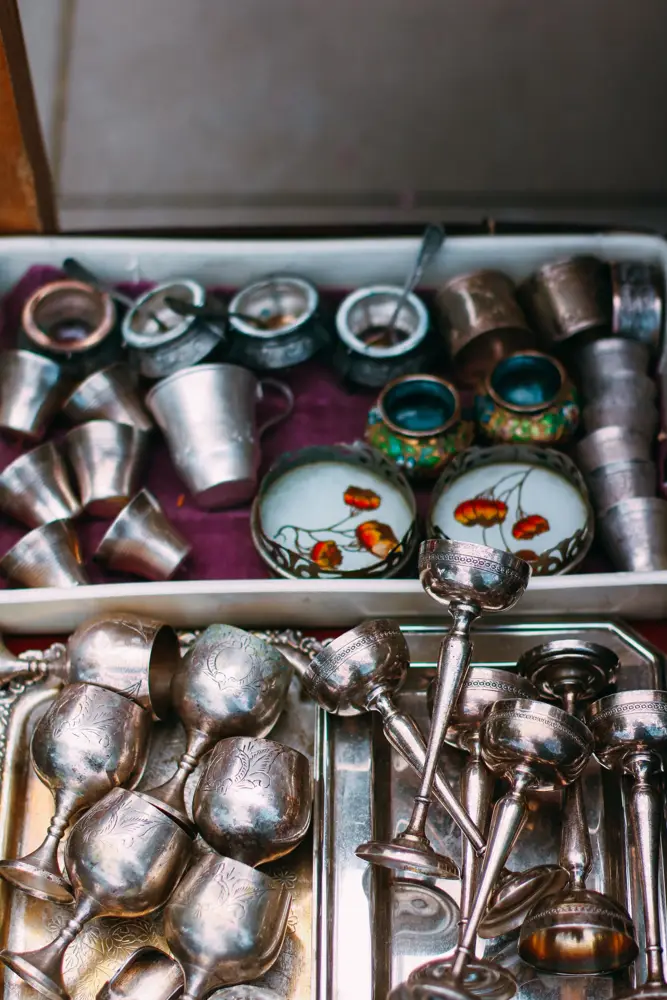
Festival silver collects lamp oil, candle wax, soot and coloured powder, and that residue blocks any tarnish treatment. The CCI recommends a mild detergent wash for most objects. Use warm water with a few drops of dish soap and a soft cloth or toothbrush, rinse, and dry at once. Lightly dull pieces often look much better after this step alone.
3. Use a silver polishing cloth for light tarnish
For a ring, chain or plain bowl that’s slightly dull, a silver polishing cloth is the gentlest fix. The CCI and Icon both say these cloths suit light tarnish because they carry far less abrasive than pastes. Use straight, even strokes and move to a clean patch as the cloth darkens.
4. The aluminium foil and baking soda bath for heavy black tarnish
This is the hack most people search for, and it’s real chemistry. Aluminium is more reactive than silver, so when the two touch in a hot baking soda solution, the sulphur moves to the aluminium and the tarnish turns back into silver. A University of California, Davis chemistry demonstration notes that this happens “without removing any silver”.
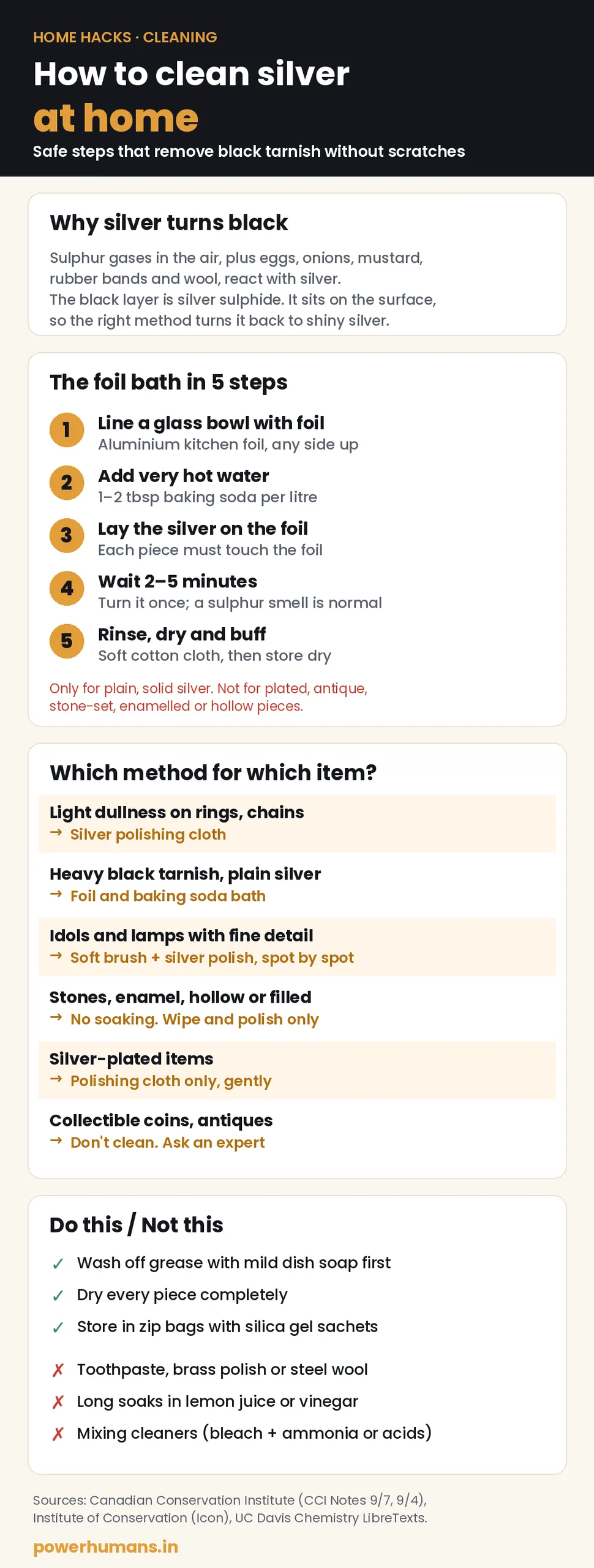
- Line the bowl. Put a sheet of aluminium foil in the bottom of a glass or ceramic bowl. Either side can face up.
- Add hot water and baking soda. Pour in very hot water from the kettle and stir in about 1–2 tablespoons of baking soda per litre. A teaspoon of salt is optional.
- Lay the silver on the foil. Each piece must touch the foil, because the reaction needs metal-to-metal contact. Use tongs, not your fingers.
- Wait 2–5 minutes. A rotten-egg smell is the sulphur leaving, so open a window. Turn heavily tarnished pieces once.
- Rinse, dry and buff. The CCI notes silver can look slightly matte afterwards. A light buff with a polishing cloth brings the shine back.
Use this only on plain, solid silver. The CCI says soaking should never be used on pieces with sealed hollow parts, and Icon advises against electrochemical cleaning for historic silver, so keep heirlooms out of the bowl.
5. Spot-clean idols, lamps and anklets
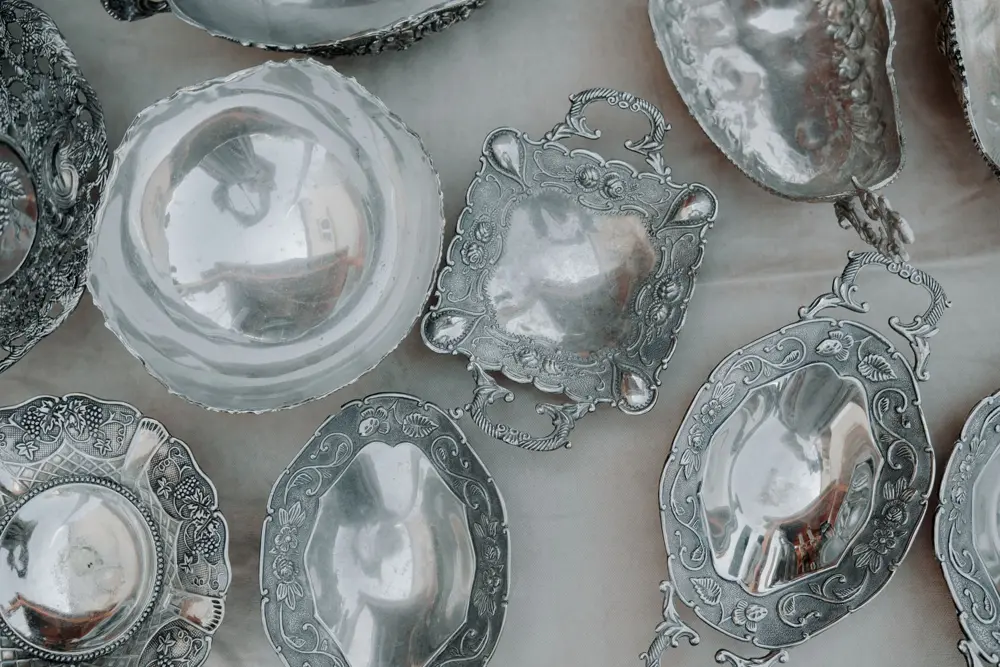
Pieces with engraving, tiny bells or joins need a local approach. Put a little silver polish on a cotton swab or soft brush, work one small area at a time, then wipe with a damp cloth and dry. The CCI suggests applying even commercial dips with a swab rather than dunking, so you don’t over-clean raised designs or trap liquid inside. A little darkness left in the grooves makes details stand out.
6. Dry completely, then buff
Icon notes that damp conditions encourage corrosion. Pat each piece dry, leave chains on a towel for an hour, and finish with the polishing cloth. Handle freshly cleaned silver with a cloth, since the CCI says skin oils and salts leave fingerprints that tarnish.
7. Store silver so it stays bright for longer
Prevention beats polishing, because every clean removes a little metal. The CCI recommends sealing each piece in a polyethylene bag with silica gel or activated charcoal to absorb moisture and tarnishing gases. At home, that means:
- One zip-lock bag per item, air pressed out
- Plain tissue or soft cotton around it, not newspaper
- A silica gel sachet or a piece of chalk inside
- No rubber bands, wool or silk
The Chicago Section of the American Chemical Society also notes that silver you use or wear often tends to stay freer of tarnish.
Which method for which silver item?
| Item | Best method | Avoid |
|---|---|---|
| Chains, rings, anklets (no stones) | Soap wash, then polishing cloth. Foil bath if very black. | Toothpaste, hard brushes |
| Plain bowls, plates, glasses, spoons | Foil and baking soda bath, then buff | Steel wool, scouring powder |
| Idols and lamps with fine detail | Soft brush or swab with silver polish, spot by spot | Soaking, especially if hollow or filled |
| Items with stones, enamel or glue | Damp cloth, then polishing cloth | Any soaking or dips |
| Silver-plated items | Soap wash and a gentle polishing cloth | Heavy polishing, foil bath |
| Collectible coins and antiques | Leave as they are, or ask an expert | All polishes and dips |
Bought silver coins or utensils this year? Our Dhanteras buying guide on gold, digital gold and ETFs covers the hidden costs. If you’re wondering whether now is a good time to add more, read why the silver price has been falling.
Mistakes to avoid when cleaning silver
- Toothpaste. It’s abrasive. Conservators warn that abrasive creams remove silver with the tarnish and leave fine scratches.
- Brass, chrome or all-metal polish. The CCI and Icon say these are harsher than silver polish and remove more metal.
- Steel wool or scouring powder. They gouge the surface and wear away engraving.
- Long soaks in lemon juice or vinegar. The CCI says silver should be exposed to acids as little as possible to avoid pitting.
- Foil baths for plated, antique or stone-set pieces. Plating can wear through, and stones or glue can loosen.
- Cleaning too often. Store pieces well and polish only when needed.
Safety note: Handle just-boiled water carefully and keep children away from the bowl. Work in a ventilated room and wear rubber gloves with commercial dips. Never mix cleaning products. The CCI notes many silver polishes contain ammonia, and bleach mixed with ammonia or acids such as vinegar releases toxic gases.
Planning festival errands too? Check the bank holidays in November 2026 for your city, and find more festival guides under Diwali.
FAQ
Can toothpaste clean silver?
It brightens silver briefly but isn’t recommended. Toothpaste grinds away a thin layer of silver and leaves fine scratches. A polishing cloth or the foil bath is gentler.
How do I clean silver with baking soda without foil?
Without foil, baking soda is just a mild scrub. Use a very wet paste on plain surfaces only, rub gently with a soft cloth, rinse and dry. The chemical tarnish reversal happens only when silver touches aluminium.
How do I clean silver without baking soda?
Wash it in warm soapy water, dry it and buff with a silver polishing cloth. For heavier tarnish, use a silver polish. The foil bath also works with hot water and a little salt, just more slowly.
How do I clean silver coins without damaging them?
If it’s collectible, don’t clean it. The CCI says polishes and dips can scratch or etch coins. For a festival coin, a gentle wash in mild soapy water and air-drying removes dirt, and keeping it in its sealed pack stops tarnish.
How do I clean German silver?
German silver (nickel silver) is an alloy of copper, nickel and zinc with no silver in it, says Encyclopaedia Britannica. Wash it with mild soap and dry it well; the foil bath isn’t designed for it. Items marked EPNS (electroplated nickel silver) have a thin silver coating, so treat them as plated.
Why does my silver turn black when I wear it?
Sweat, skin salts and oils, plus sulphur in the air, all react with silver, so rings and anklets darken faster in humid weather. Wipe jewellery after wearing it, keep lotion off it and store it sealed.
The takeaway
Knowing how to clean silver at home safely comes down to three habits: wash first, use chemistry instead of force on plain solid silver, and store everything sealed and dry. Add it to your Diwali cleaning list this week, and your lamps, idols and anklets will be ready for Diwali without a new scratch. For more simple everyday guides, visit our Lifestyle section or try these simple steps to a greener home.
Related reads
- Why Silver Price Is Falling: Should You Buy Silver Now?
- Buying Gold This Dhanteras? The Hidden Costs of Jewellery, Digital Gold and ETFs
- Why Your Throat Burns Every October: 9 Smog-Season Habits That Protect Your Lungs
Sources
- Canadian Conservation Institute: Silver, care and tarnish removal (CCI Notes 9/7)
- Canadian Conservation Institute: Basic care of coins, medals and medallic art (CCI Notes 9/4)
- Icon, the Institute of Conservation: Silver and plate, collections care guide
- Chemistry LibreTexts (UC Davis): Cleaning silverware, an electrochemical reaction
- Journal of Chemical Education: Silver to Black, and Back (classroom activity)
- Chicago Section, American Chemical Society: Make your own silver polishing dip
- Encyclopaedia Britannica: Nickel silver (German silver)









Leave a Reply