

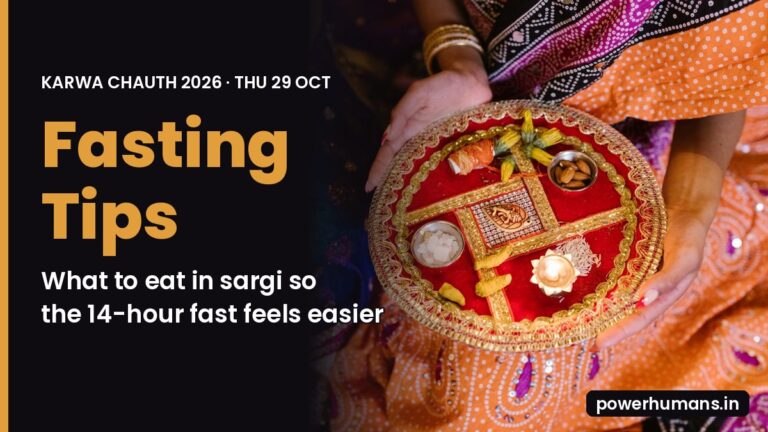
On Thursday, 29 October, millions of women across India will go without food, and usually without water, from sunrise until the moon comes up. In Delhi that’s 13 hours and 46 minutes; in Mumbai it’s closer to 14 and a half. The fast is the easy part to plan. Getting through it without a pounding headache or a dizzy spell by evening takes a little more thought.
These Karwa Chauth fasting tips cover what to eat in sargi, how to hydrate the day before, who should keep a lighter fast, and how to break it gently so the celebration doesn’t end with a stomach ache.
Quick answer
- Karva Chauth 2026 date: Thursday, 29 October. In New Delhi, the fast runs from 6:31 AM to moonrise at 8:17 PM (Drik Panchang).
- Hydrate the day before, not just at sargi. Your urine should be pale, not dark yellow.
- Sargi: pick slow foods (fibre, protein, nuts, fruit) over very salty, fried or sugary items.
- Take it easy during the day: stay out of the sun and leave heavy chores for later.
- Break the fast gently: water first, then a light, balanced plate.
- Pregnant, diabetic or on regular medicines? Talk to your doctor first, and stop the fast if you feel unwell.
Karva Chauth 2026 date, sargi time and moonrise
According to Drik Panchang, Karva Chauth falls on Thursday, 29 October 2026. The Chaturthi tithi begins at 1:06 AM on 29 October and ends at 10:09 PM the same night. For New Delhi, the puja muhurat is 5:38 PM to 6:56 PM and the moon is expected at 8:17 PM. Dainik Jagran lists the sargi window in Delhi as roughly 4:54 AM to 5:45 AM.
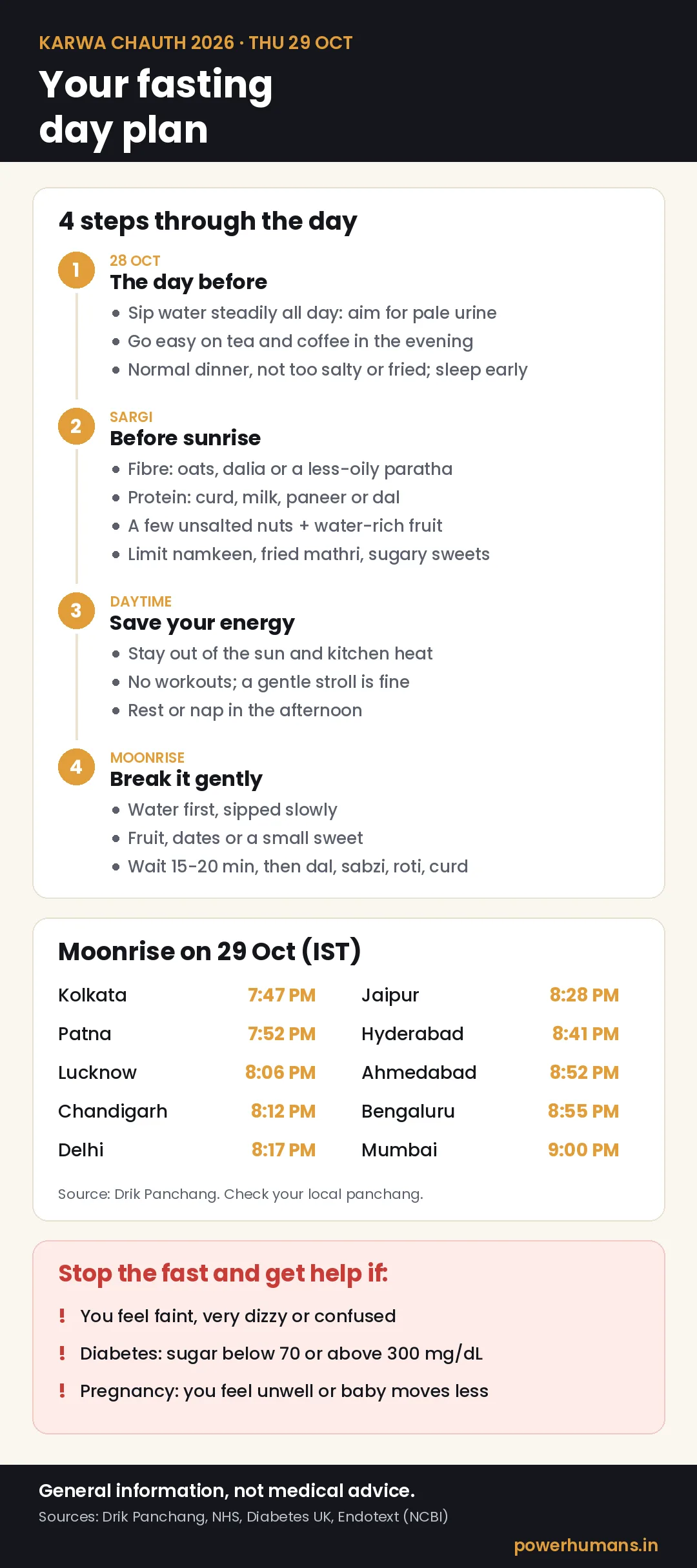
Moonrise is different in every city, and that changes how long you fast. Here are Drik Panchang’s timings for some major cities (all IST, 29 October):
- Kolkata: fast 5:39 AM, moonrise 7:47 PM
- Patna: fast 5:56 AM, moonrise 7:52 PM
- Lucknow: fast 6:14 AM, moonrise 8:06 PM
- Chandigarh: fast 6:35 AM, moonrise 8:12 PM
- Delhi: fast 6:31 AM, moonrise 8:17 PM
- Jaipur: fast 6:34 AM, moonrise 8:28 PM
- Hyderabad: fast 6:13 AM, moonrise 8:41 PM
- Ahmedabad: fast 6:43 AM, moonrise 8:52 PM
- Bengaluru: fast 6:12 AM, moonrise 8:55 PM
- Mumbai: fast 6:37 AM, moonrise 9:00 PM
Haze or buildings can delay the sighting by a few minutes, so check your local panchang on the day.
The day before: start hydrating early
A nirjala fast means no water for 13 to 15 hours. You can’t “store” a day’s water at 5 AM, so preparation starts on 28 October.
- Drink steadily through the day before rather than gulping a litre at sargi. The NHS says a good sign you’re drinking enough is pale-coloured urine.
- Go easy on tea and coffee the evening before. The NHS advises avoiding caffeinated drinks when you’re trying to rehydrate, because they can add to fluid loss.
- Eat a normal, balanced dinner on the 28th, with dal, sabzi, roti or rice and curd. A very heavy, salty or fried dinner can leave you thirsty before the fast even begins.
- Sleep early. Sargi means a 4:30 AM alarm, and a tired body finds a long fast harder.
If you’re in north India this week, the air may also be smoky in the evenings. Our guide on how to protect your lungs during smog season is worth a look before the outdoor puja and moon-watching.
Sargi me kya khaye: what to eat (and skip) before sunrise
Sargi is traditionally a thali from the mother-in-law, with fruit, dry fruits, sweets, mathri and often pheni or sevaiyan. The health goal is simple: foods that release energy slowly and don’t leave you parched.
Good sargi items
- Fibre and slow carbohydrates: a stuffed paratha made with less oil, a small bowl of oats or dalia, or whole-wheat roti. Diabetes UK’s fasting advice recommends high-fibre starchy foods before a fast because they’re absorbed more slowly.
- Protein: paneer, curd, a glass of milk, or a small bowl of dal or chana. Diabetes UK notes that lentils and chickpeas give you both protein and fibre.
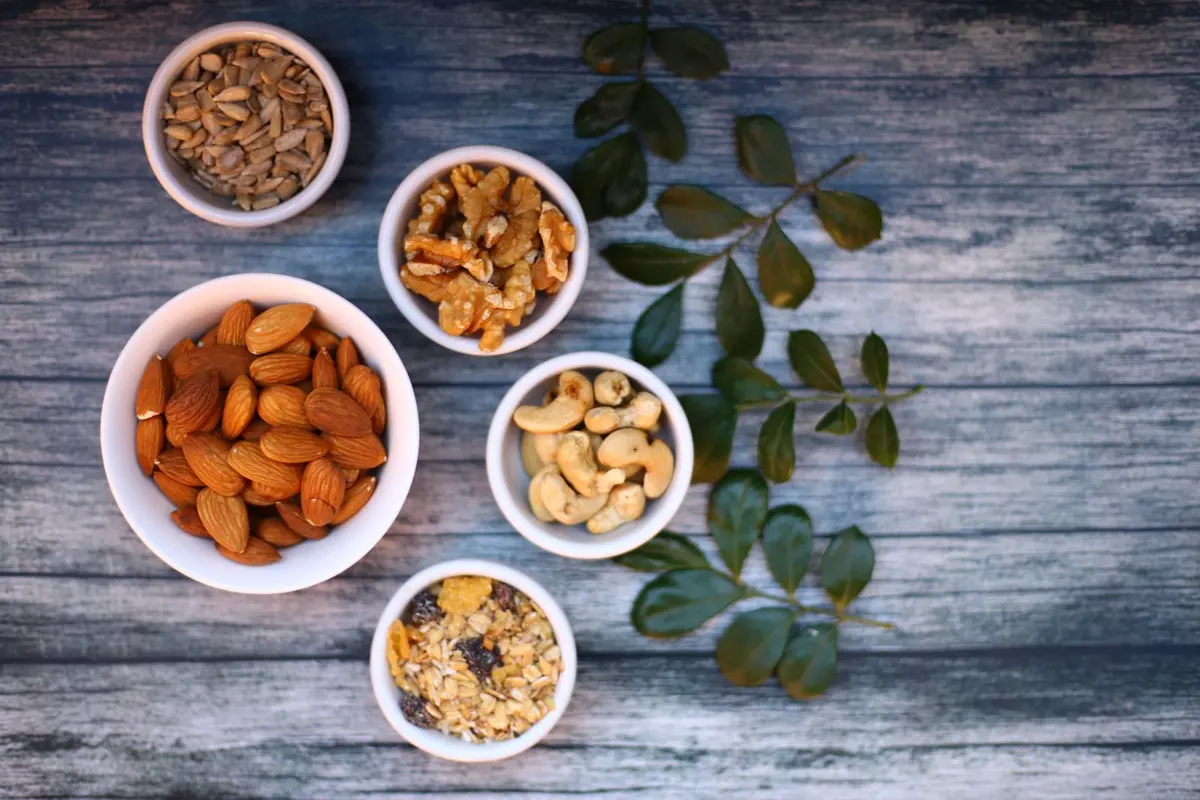
- A small handful of nuts: almonds, walnuts or cashews (unsalted). They add healthy fat and staying power.
- Water-rich fruit: orange, papaya, apple, pomegranate or a banana. The NHS lists foods with a high water content, such as fruit and soup, as an easy way to add fluids.
- Water or coconut water, sipped steadily through the meal rather than all at once.
Go easy on these
- Very salty or fried items like namkeen, fried mathri and pickles. They make the afternoon thirst worse.
- Lots of mithai or sugary pheni. A quick sugar rush tends to fade by mid-morning. One small portion is plenty.
- Strong tea or coffee as your only drink, for the hydration reason above.
- Overeating. A huge 5 AM meal leaves you sluggish and bloated.
Karwa Chauth fasting tips for getting through the day
- Stay out of the sun and the kitchen heat. Sweating means losing water you can’t replace until moonrise. Ask family to share the cooking for the evening meal.
- Skip workouts for the day. A gentle stroll is fine; a gym session isn’t a good idea on a no-water fast.
- Rest in the afternoon. A short nap helps with the mid-afternoon energy dip.
- Know the warning signs. The NHS lists headache, feeling dizzy or light-headed, tiredness, a dry mouth and dark yellow urine as signs of dehydration. Feeling faint, confused or unusually sleepy is a reason to stop the fast and drink water.
- Look after your mind, too. Hunger makes anyone irritable; slow breathing, music or time with family helps the hours pass. Our guide to self-care in a busy world has more simple ideas.
Who should keep a lighter fast (or skip it)
Many families already accept a phalahar fast (with fruit and water) or a fast with water for women who are pregnant, unwell or on medication. That’s a sensible choice, not a lesser one.
Karva Chauth fast in pregnancy
Medical guidance on religious fasting, reviewed in the NIH-hosted Endotext reference, says pregnant women with diabetes are high risk and usually advised not to fast, and that a pregnant woman should stop fasting if she feels unwell or notices reduced baby movements. Speak to your gynaecologist before Thursday and ask whether water and fruit are allowed.
Karwa Chauth fast with diabetes
Diabetes UK says fasting can be dangerous with diabetes and should only be done after talking to your diabetes team, especially if you take insulin or tablets such as sulphonylureas that can cause low blood sugar. Signs of a “hypo”, according to the NHS, include shaking, sweating, dizziness, hunger, a racing heart, blurred vision and confusion. International guidance used by doctors advises breaking a fast straight away if blood sugar falls below 70 mg/dL (about 4 mmol/L) or rises above 300 mg/dL. For a low reading, the NHS advises something sugary first, such as a small glass of fruit juice, then a recheck after 10 to 15 minutes. A finger-prick test doesn’t break the fast.
Others who should check first
If you have low blood pressure, kidney or heart problems, a history of fainting, or take regular medicines, ask your doctor whether a no-water fast is safe. Skipping medicines for a fast isn’t worth the risk.
How to break the Karwa Chauth fast without feeling sick
After 14 hours with nothing, it’s tempting to dive straight into pakoras and halwa. Slow down instead.
- Start with water. Sip a glass slowly. If you feel very drained, a glass of coconut water, nimbu pani or a homemade ORS can help.
- Add something light. A piece of fruit, a few dates or a small sweet, as the ritual suggests.
- Wait 15 to 20 minutes, then eat a balanced plate: dal, sabzi, roti or rice, and curd.
- Keep fried food and sweets to a small portion. Diabetes UK points out that mithai can push blood sugar up quickly, and fried food in large amounts is hard on an empty stomach.
- Keep sipping water through the evening until bedtime.
Festive gifting often follows Karwa Chauth. If gold is on the list, read about the hidden costs of buying gold this Dhanteras first. For more, explore our Health & Fitness section, Lifestyle stories and what’s new in Trending.
FAQ
Karva Chauth 2026 kab hai?
Karva Chauth 2026 is on Thursday, 29 October. In New Delhi, the fast runs from 6:31 AM to moonrise at 8:17 PM, according to Drik Panchang.
What should I eat in sargi to avoid feeling thirsty?
Water-rich fruit, curd or milk, a few unsalted nuts and a fibre-rich item like oats or a less-oily paratha. Limit salty, fried and very sugary items.
Can I drink water during the Karwa Chauth fast?
The traditional fast is nirjala (no water), but many women who are pregnant, unwell or on medicines keep a lighter fast with water or fruit, and that’s widely accepted. If you feel dizzy, faint or confused, drink water: your health comes first.
Is it safe to keep a Karwa Chauth fast with diabetes?
Only after talking to your doctor. Diabetes UK warns that fasting can be dangerous with diabetes, especially on insulin or sulphonylureas. Check your sugar during the day, and break the fast if it falls below 70 mg/dL or you feel the signs of a hypo.
The takeaway
A good Karwa Chauth fast starts the day before: drink well on the 28th, eat a balanced sargi, rest in the afternoon and break the fast slowly. Above all, listen to your body; devotion was never meant to cost you your health. Share these tips with the women in your family fasting this Thursday.
This article is for general information and isn’t medical advice. If you’re pregnant, have diabetes, blood pressure, kidney or heart problems, or take regular medicines, please consult your doctor before fasting.
Related reads
- Why Your Throat Burns Every October: 9 Smog-Season Habits That Actually Protect Your Lungs
- The Ultimate Guide to Self-Care in a Busy World
- How to Lose Weight Without Exercise
Sources
- Drik Panchang: Karwa Chauth 2026 date, puja muhurat and moonrise (city-wise)
- Dainik Jagran: Karwa Chauth 2026 timetable, sargi time and moonrise
- NHS: Dehydration, symptoms and prevention
- NHS: Low blood sugar (hypoglycaemia)
- Diabetes UK: Fasting safely with diabetes
- Endotext (NCBI Bookshelf): Diabetes management during religious fasting, including pregnancy




Leave a Reply