

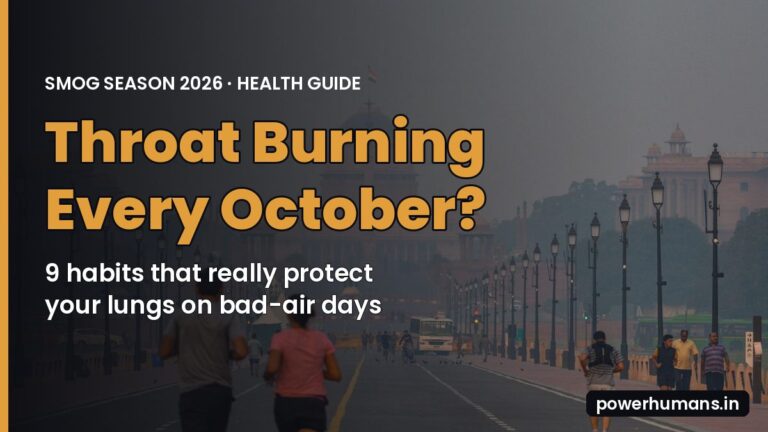
On the morning of Friday, 23 October 2026, Delhi’s air quality reading hit 337 at 9:31 am, according to AQI.in data reported by India Today. Just three days earlier, on 20 October, the official average had been 179. If your throat started feeling scratchy and your eyes started watering around the same time, that’s not your imagination.
Smog season is back across north India. The good news? A handful of simple, evidence-based habits can noticeably cut how much of that dirty air ends up in your lungs. Here’s what actually works, and what’s mostly a waste of money.
Quick answer
- Check the AQI every morning (CPCB’s SAMEER app or any reliable tracker) and plan your day around it.
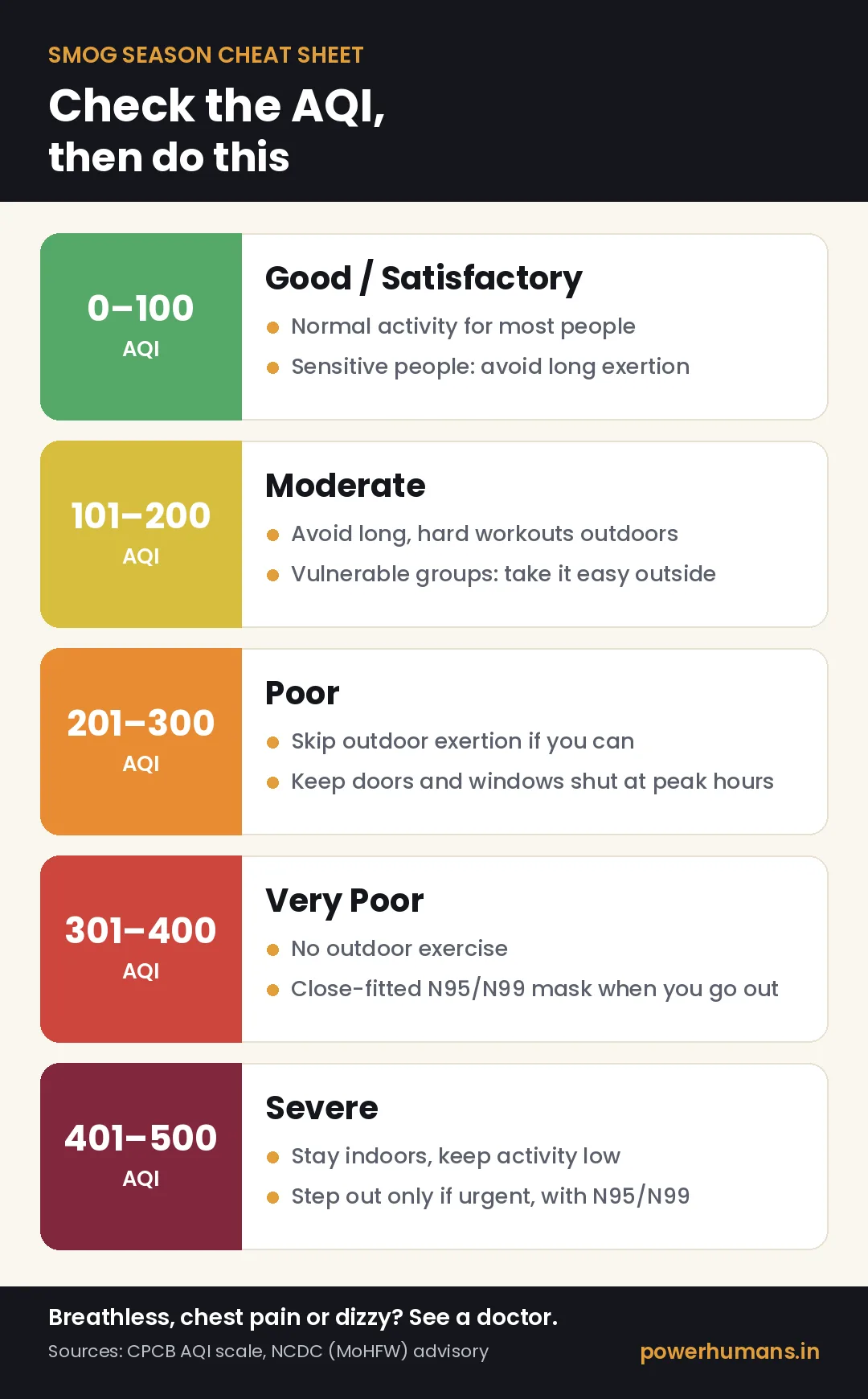
- Above 200 (“Poor”), skip outdoor workouts and keep doors and windows shut in the early morning and late evening.
- Above 300 (“Very Poor”), wear a close-fitted N95 or N99 mask whenever you step out.
- Indoors, don’t add smoke: no incense or mosquito coils in closed rooms, no smoking, and wet-mop instead of sweeping.
- See a doctor if you get breathlessness, chest pain, dizziness or a cough that won’t settle.
Why the air suddenly gets so bad in late October
Every year, the same pattern repeats. On 21 October 2026, Delhi’s daily average AQI reached 244, which is in the “Poor” band, according to the Central Pollution Control Board (CPCB) bulletin shared by the Press Information Bureau. The Commission for Air Quality Management (CAQM) responded the same day by invoking Stage I of the Graded Response Action Plan (GRAP) across Delhi-NCR, the Indian Express reported.
GRAP is a four-step emergency playbook. Stage I kicks in at AQI 201–300, Stage II at 301–400 (“Very Poor”), Stage III at 401–450 (“Severe”) and Stage IV above 450 (“Severe+”). Stage I brings measures such as a ban on open waste burning, no coal or wood fuel in roadside eateries and commercial kitchens, diesel generators only for emergencies, and curbs on construction and demolition on larger plots.
Here’s the uncomfortable part: emergency rules alone haven’t fixed the problem. An analysis by the Centre for Research on Energy and Clean Air (CREA), reported on 22 October, found Delhi’s average winter AQI actually rose from 280 in 2022–23 to 295 in 2025–26. In other words, protecting yourself is still very much your own job. For more timely explainers like this one, keep an eye on our Trending stories.
What smog actually does to your body
The real villain is fine particulate matter, especially PM2.5: particles so small they can travel deep into your lungs. It’s a global problem, too: the World Health Organization says that in 2019, 99% of the world’s population lived in places where its air quality guideline levels were not met. On bad smog days, the air in many north Indian cities is a long way from those levels.
According to the health advisory from India’s National Centre for Disease Control (NCDC), short bursts of heavy pollution can cause:
- Irritated eyes, nose, throat and skin
- Cough, wheezing and breathing difficulty
- Chest discomfort or pain, headache and giddiness
Over the long term, NCDC notes that even lower levels of pollution are linked to chronic lung and heart disease, lung cancer and early deaths.
Who needs to be extra careful
NCDC lists these groups as most vulnerable: children (especially under 5), older adults, pregnant women, people with existing lung, heart or stroke-related conditions, and people who work outdoors for long hours, like traffic police, construction workers, street vendors and auto drivers. If that’s you or someone at home, take the tips below more seriously.
9 smog-season habits that actually protect your lungs
1. Make the AQI your morning weather check
Before you plan a walk, a school run or a market trip, look up your city’s AQI. CPCB’s official SAMEER app shows readings from government monitoring stations. Treat a “Poor” or worse reading the way you’d treat heavy rain: change the plan.
2. Move your workout indoors on bad days
When you exercise, you breathe faster and deeper, pulling in more particles. NCDC advises avoiding outdoor exertion when the AQI is “Poor” (201–300) and avoiding outdoor physical activity altogether at “Very Poor” (301–400) and above. Swap your run for yoga, bodyweight exercises or stair climbing at home.
3. Time your fresh air carefully
Pollution often builds up overnight and peaks in the early morning and late evening. NCDC’s advisory suggests keeping external doors and windows closed during those hours on poor-to-severe days, and ventilating, if needed, between about 12 pm and 4 pm.
4. Wear the right mask, the right way
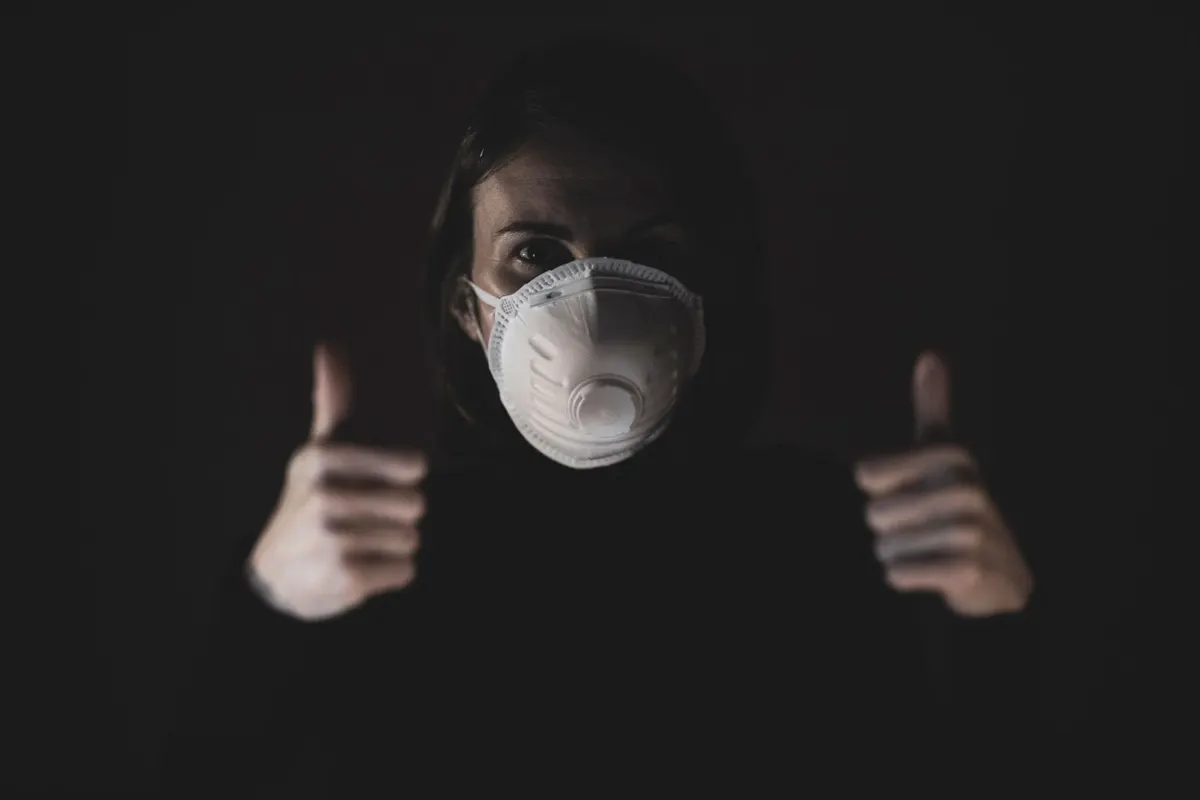
For “Very Poor” and “Severe” days, NCDC specifically recommends a close-fitted N95 or N99 mask. Fit matters as much as the label: the mask should seal around your nose and chin with no gaps. Loose cloth masks, scarves and handkerchiefs are not what the advisory recommends for these days.
5. Stop making indoor air worse
This one surprises people. NCDC advises against burning incense sticks and mosquito coils in closed rooms, using room fresheners, smoking, and burning wood or coal indoors. If you’re spending more time inside, that air needs to stay as clean as possible.
6. Clean smarter, not harder
Dry sweeping kicks settled dust straight back into the air. The advisory recommends wet mopping instead, and if you vacuum, using a machine with a HEPA (High Efficiency Particulate Air) filter.
7. Stay away from pollution hotspots
Slow, heavy traffic, construction sites and industrial areas are where exposure is highest. If you can, choose quieter routes for walking, keep car windows up in traffic, and consider public transport or carpooling. On the worst days, working from home is a genuinely healthy choice, and a few tweaks can make your home office setup comfortable enough for a long week indoors.
8. Rinse, gargle and hydrate
NCDC suggests washing your eyes regularly with running water, gargling with warm water and drinking plenty of fluids. These won’t undo pollution, but they can ease irritation.
9. Know when to call a doctor
Seek medical help if you notice breathlessness, giddiness, a persistent cough, chest discomfort or pain, or red, watery eyes, as NCDC advises. People with asthma or COPD should talk to their doctor before the season peaks about an action plan and their medicines.
What about air purifiers?
A purifier with a true HEPA filter can help reduce fine particles inside a closed room, which is why it’s worth considering for a bedroom, a child’s room or an elderly parent’s room. Two practical tips: buy one sized for the room you’ll actually use it in, and keep the doors and windows shut while it runs, otherwise it’s fighting the whole street. Don’t forget to replace the filter as the maker recommends.
A purifier is a helpful extra, not a cure. The habits above cost nothing and still do most of the work. And looking after your mood matters too during long weeks indoors; our guide to self-care in a busy world has easy ideas.
Small changes that help everyone breathe
Many of the biggest smog sources are things we can each cut back on: burning leaves and waste in the open, bursting firecrackers, and idling vehicles. NCDC’s advisory asks people to avoid all three. If you want to go further, these simple steps to a greener life add up over a whole neighbourhood. You’ll find more everyday wellness reads in our Health & Fitness section.
FAQ
What AQI level is considered unsafe?
On India’s CPCB scale, 201–300 is “Poor”, 301–400 is “Very Poor” and 401–500 is “Severe”. From “Poor” upwards, even healthy people may feel breathing discomfort, and NCDC advises cutting outdoor exertion.
Is a surgical or cloth mask enough during smog?
For very poor and severe days, NCDC recommends a close-fitted N95 or N99 mask, because these are designed to filter fine particles like PM2.5. Fit is key: gaps around the edges let polluted air in.
Should I stop my morning walk completely?
Not necessarily. Check the AQI first. On “Poor” or worse days, move your exercise indoors, and on cleaner days, walk later in the day, away from heavy traffic.
Can I open windows at all?
Yes, but pick your time. On poor-to-severe days, NCDC suggests keeping them shut in the early morning and late evening and ventilating between about 12 pm and 4 pm if needed.
The takeaway
You can’t control the smog, but you can control how much of it you breathe. Check the AQI, shift workouts indoors on bad days, wear a well-fitted N95 when it’s very poor, and stop adding smoke indoors. Start with those four habits today, and share this with someone in your family who needs the reminder.
This article is for general information and isn’t medical advice. If you have asthma, a heart or lung condition, or are pregnant, please consult your doctor for advice suited to you.
Related reads
- The Ultimate Guide to Self-Care in a Busy World
- Living Green: Simple Steps to a More Sustainable Life
- Mastering the Art of Working from Home: Tips for Success
Sources
- Press Information Bureau: CPCB daily AQI bulletin for Delhi
- The Indian Express: GRAP Stage 1 restrictions in Delhi-NCR
- India Today: Delhi’s AQI surges past 300 despite GRAP measures (23 Oct 2026)
- Commission for Air Quality Management: GRAP schedule for NCR
- NCDC (MoHFW): Health Advisory on Air Pollution
- NCDC (MoHFW): Air Pollution and its Impact on Health, Handbook for ASHA
- World Health Organization: Ambient (outdoor) air quality and health






Leave a Reply